

⚡ The Wire
Ticker Focus: $DELL & $NVDA. The "Hardware Phase" has printed massive gains for early adopters. But Whales are now rotating capital. We are moving from building the brain (chips) to building the nervous system (connectivity). The next alpha won't be in the chipmakers; it will be in the Global Data Mesh that connects them.
Macro Trigger: The Latency War. As AI models grow, they require real-time data from every corner of the globe. Terrestrial cables are too slow and too limited. The only solution is an Orbital Network. This is not "space exploration"; this is "space industrialization."
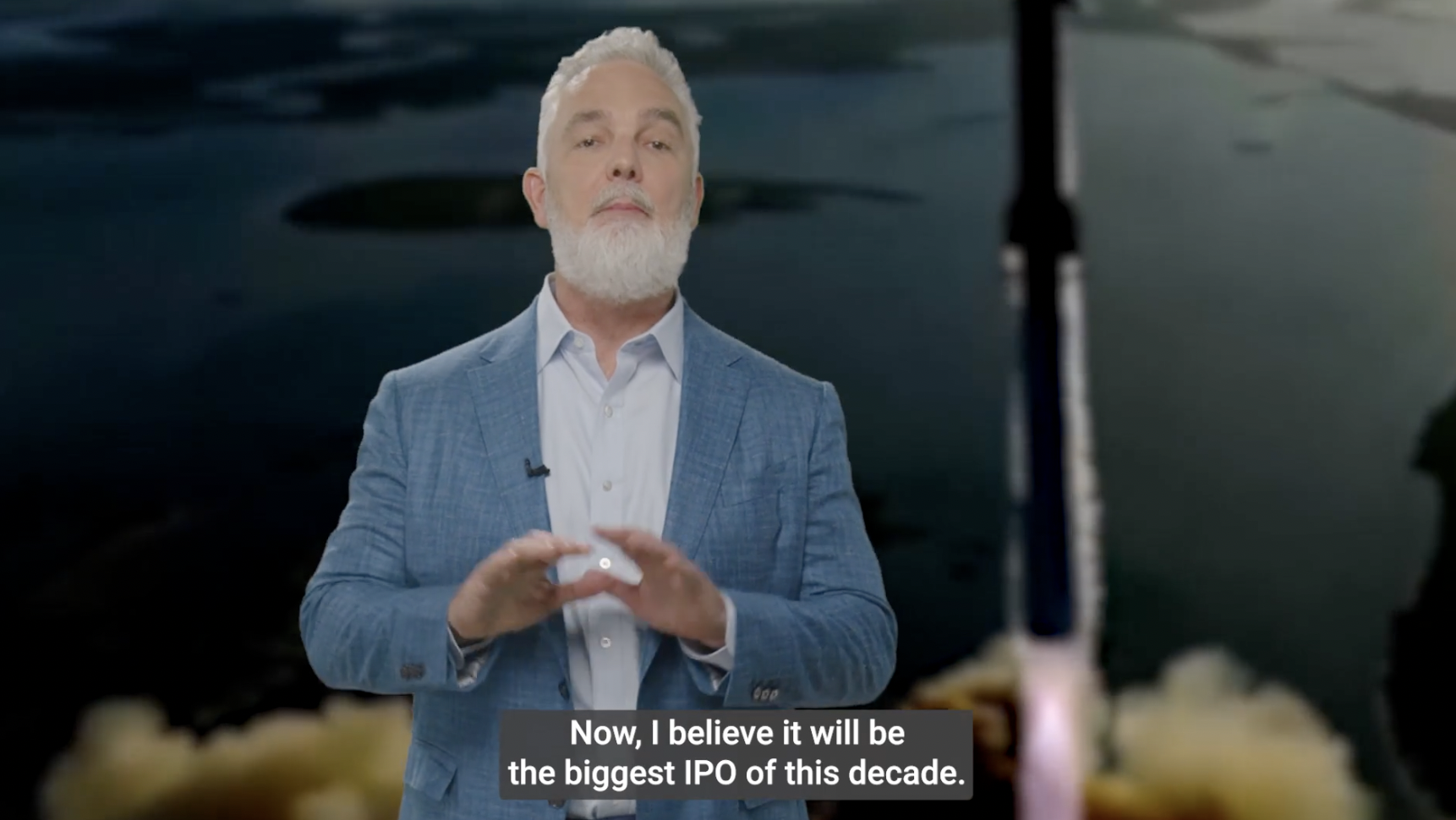
The Hardware Ceiling

For the last 18 months, the entire financial world has crowded into a single trade: The Shovel Sellers.
We bought Nvidia. We bought Dell. We bought SMCI. The thesis was simple: "AI is the new gold rush, so buy the pickaxes." And it worked. Trillions of dollars of market cap were created by betting on the creation of intelligence.
But the "Whale" looks for the saturation point.
We are now reaching a "Hardware Ceiling." We have built the brains, but we lack the nervous system. You can have the fastest H100 chip in a data center in Virginia, but if it cannot communicate with an autonomous drone in the Pacific or a logistics hub in Africa in real-time, its value is capped.
The current internet infrastructure - fiber optic cables buried under mud and oceans - is a relic of the 20th century. It is fragile, expensive to maintain, and geo-restricted.
AI demands Ubiquity.
This brings us to the "Vertical Frontier." The next trillion-dollar opportunity isn't in making the chips faster; it is in building the Orbital Infrastructure that allows those chips to talk to the world. We are seeing a capital rotation from "Compute" to "Connectivity."
The smart money understands that space is no longer about flags and footprints. It is about Latency and Bandwidth. It is about building a server room that orbits the planet every 90 minutes.
The ROI Reality Check

Why is this shift happening now? Because the "Hype Phase" of AI is ending, and the "ROI Phase" is beginning.
Corporations have spent billions on AI hardware. Now, shareholders are asking a dangerous question: "Where is the profit?"
This is the cold shower that is about to hit the tech sector. Building a Large Language Model (LLM) is cool. But using that model to fire 50% of a marketing department and increase revenue? That is profitable.
The market is hunting for Applied AI.
We are looking for the companies that are taking this raw computing power and global connectivity and turning it into pure efficiency. This is where the workforce disruption begins. It is not speculation anymore; it is simple math.
If an AI platform can analyze consumer behavior, predict trends, and generate creative assets with higher accuracy than a team of humans - and do it for pennies on the dollar - the corporation has a fiduciary duty to adopt it.
This is the "Industrial Revolution of the Mind."
The winners of the next cycle won't be the ones building the models (OpenAI, Google). The winners will be the Specialized Platforms that plug into the Fortune 1000 and automate their revenue engines. We are moving from "General Intelligence" to "Specific Utility."
And unlike the chip trade, which is priced for perfection, the "Application Layer" is still in the early innings.
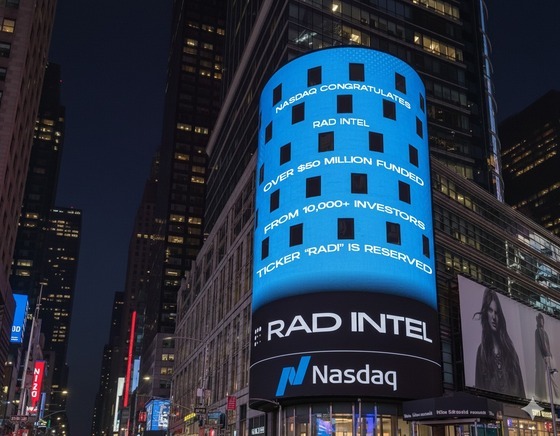
Own the Transformation

The narrative is clear:
Infrastructure: Global connectivity moves to space (Jeff Brown's thesis).
Application: AI moves from "chatbots" to "workforce automation" (RAD Intel's thesis).
So, how does the individual investor survive this?
The "Whale" strategy is to never compete with the machine. If you are selling labor, you are short the market. You must be long the machine.
You need to identify the companies that are building the "rails" (Space) and the companies that are running the "trains" (ROI-driven AI platforms).
Most retail investors are stuck looking at the past. They are buying the stocks that already went up 500%. That is momentum chasing, not investing.
Real wealth is made in the private markets or the pre-IPO stages - the "Regulation A+" type offerings where valuations haven't yet been inflated by the high-frequency trading algorithms. It is made by identifying the infrastructure (like Starlink's network effects) before Wall Street fully prices it in.
We are entering a period of "Structural Disruption." The old guard of advertising, logistics, and data management is being dismantled.
You have two choices:
Ignore it and hope your industry isn't next.
Allocate capital to the disruptors and own a piece of the new efficiency.
The hardware trade was Act I. The Infrastructure and Application trade is Act II. And Act II is where the real drama - and the real yield - happens.
The Bottom Line
The "Easy Money" in chips has been made. The "Smart Money" is now rotating into the infrastructure above our heads and the AI applications that actually drive revenue. Do not be left holding the bag on yesterday's trade.
|
Stay ahead of the current - subscribe free
Subscribe to Whales Investing
|
