

In Partnership With

📈 The "Cheat Code" to the Market: How the 1% Speak a Different Language
Hello friends, Mr. Whale here.
You know, when I’m swimming through the deep institutional waters, watching the currents of capital flow between New York, London, and Tokyo, I notice a fundamental difference between the "little fish" and the "big fish."
The little fish - the retail investors - swim frantically. They spend all their time trying to pick the "perfect" stock. They analyze charts until their eyes bleed, they watch cable news for tips, and they stress over every quarterly earnings report. They are constantly trying to swim upstream, fighting the current, hoping that one lucky pick will change their life.
The big fish? The hedge funds and the whales? They don't operate like that. They don't just "buy stocks" and hope for the best. They use instruments.
They speak a different language entirely. To the untrained eye, their orders look like a string of random, chaotic numbers. But to a pro, those numbers are a precise set of coordinates for profit.
The 18-Digit Secret
I’ve always said that the market isn't rigged; it's just coded. And if you know the code, you can unlock outcomes that look like magic to everyone else.
We are talking about specific contract strings - what the pros call "derivatives" - that allow you to extract cash from the market without the burden of owning a stock forever.
Think about it this way: When you buy a stock, you are married to it. You take on all the risk of the CEO making a mistake, the sector crashing, or a recession hitting. But when you use these "codes," you are entering a temporary contract. You are saying, "I want to extract value from this specific movement, at this specific time, and then I want out."
It’s like walking up to an ATM, typing in a secure PIN, withdrawing your cash, and walking away before the bank even knows you were there. That is the level of precision the top 1% operate with. They define their risk, they define their timeline, and most importantly, they define their payout before they even enter the trade.
Why "Complexity" is a Myth
The industry wants you to think this is too hard for you. They want you to think 18-digit codes are for Ph.D.s and quant algorithms. Why? Because if you think it's too hard, you’ll keep paying them fees to manage your money.
But the truth is, once you understand the syntax, it’s just a sentence. It tells you the asset, the date, the price, and the direction. Once you can read that sentence, you stop being a gambler and start being a technician.
🐳 How to Swim with the Current: The Velocity of Money
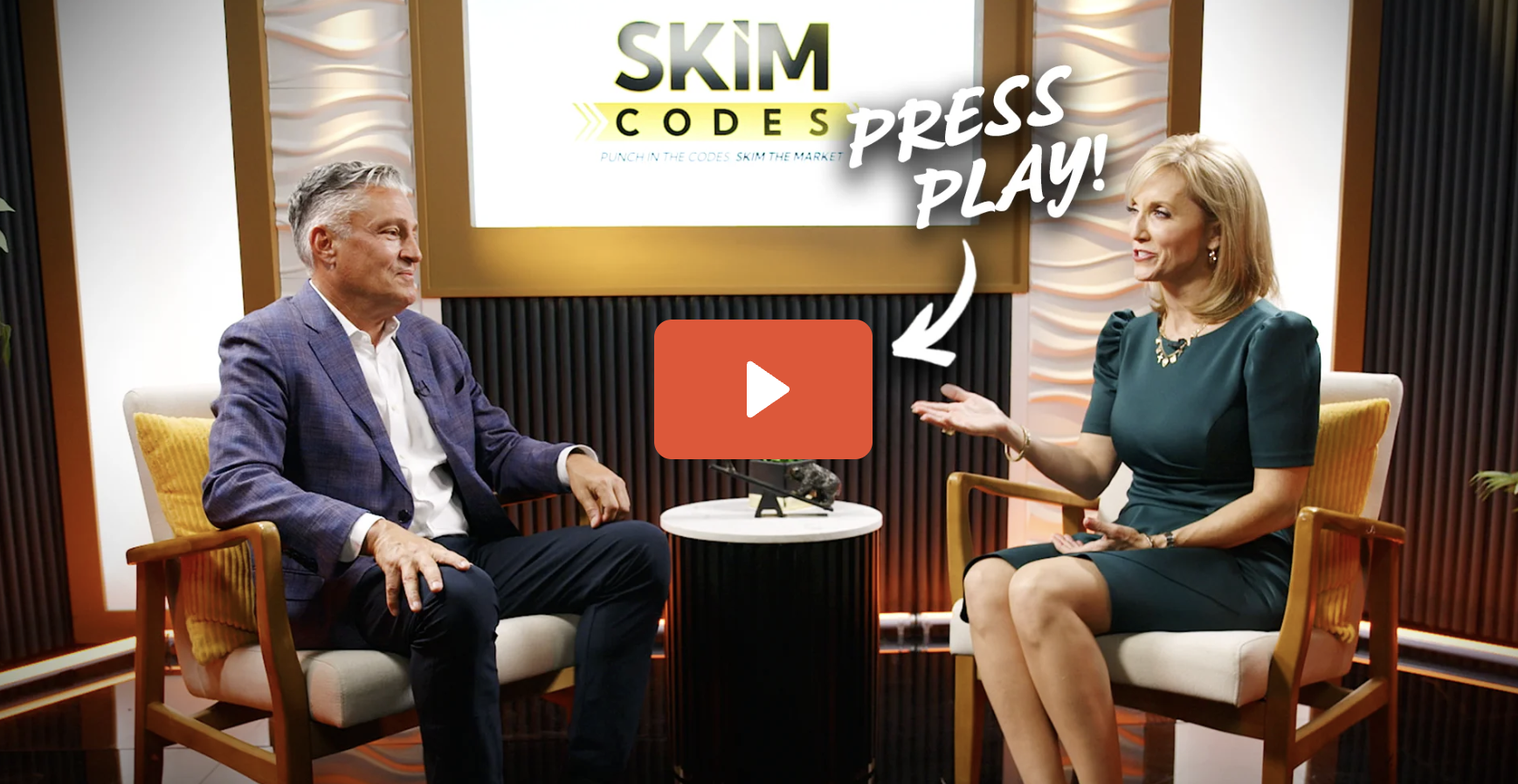
We found the strategy: Short-term, high-probability trade codes. We found the expert: Larry Benedict.
Now, why does Mr. Whale like this specific approach? Because it addresses the single biggest killer of retail portfolios: Stagnation.
Most investors practice "patience without purpose." They buy a stock and wait five, ten, sometimes twenty years, hoping it goes up. That is "dead money." While that capital is sitting there doing nothing, inflation is eating it alive.
The strategy Larry Benedict uses flips that logic on its head. It prioritizes Velocity.
The 7-Day Payday Cycle
Larry is talking about a 7-day cycle. Why is that timeframe so powerful? Because it allows you to compound your capital 52 times a year.
If you make 5% on a trade in a year, you made 5%. If you make 5% on a trade in a week, and you can repeat that... you are looking at exponential growth.
This is how the top 1% hedge funds operate. They don't park money; they cycle money. They move it in, extract the yield, and move it out. When Larry talks about a code that could put over $6,000 in your account in seven days, he isn't talking about a lottery ticket. He is talking about the Velocity of Money.
The "84% Win Rate" Factor
In the ocean, survival isn't about hitting a home run; it's about eating every day. If you chase a massive meal that you only catch 10% of the time, you starve. You need consistency.
Larry’s codes have seen an 84% win rate. That number is staggering. It means that nearly 8.5 times out of 10, the code does exactly what it’s supposed to do.
This changes your psychology. When you know the odds are heavily stacked in your favor, you stop trading with emotion. You stop sweating the red days. You simply execute the code, take the profit, and wait for the next signal.
The "Income" Mindset vs. The "Casino" Mindset
Most people treat the stock market like a casino. They put money in the slot machine and pull the lever, hoping for a jackpot that lets them quit their job.
Smart whales treat the market like a business. They want a paycheck.
This strategy is about generating reliable cash flow. It’s about seeing $6,316 hit your account in a week, putting it in your pocket to pay bills, buy a car, or reinvest, and then looking for the next code. It turns the market into an ATM rather than a roulette wheel.
If you’re tired of the "buy and hope" strategy that has left millions of Americans flat for the last three years, maybe it’s time to learn the language of the pros.
Whale's Break
Most investors rely on "Buy and Hope," leaving their capital exposed to long-term risks. Institutional Whales use "codes" (derivatives) to extract specific value in short timeframes. Larry Benedict is sharing the specific 18-digit codes he used to generate $274M in hedge fund profits.
|
Sponsored Content
Top Picks from Partners We Trust
|
Whale's Final Word
The water is warm, but you need the right gear. Don't try to decipher these codes on your own. You need a guide who has swum these waters before. Let Larry Benedict - who has audited profits of $274 million - show you how to read the code.
- The Whale Investor
If you could flip a switch on your portfolio today, which upgrade would you choose?
- Higher Velocity (Cash Flow): I want weekly payouts ($1k-$5k) to pay bills and live life now.
- Higher Growth (Jackpots): I don't need cash now; I want my account to 10x in 5 years.
- Higher Safety (Defense): I just want to stop losing money to inflation and crashes.
- Higher Certainty (Win Rate): I'm tired of losing. I want an 80%+ win rate, even if the gains are smaller.
Your feedback is important to us. Here are the results of yesterday's poll:

12/07 Poll - Question: If you found $50,000 cash in a bag today, where does it go immediately?
|
Stay ahead of the current - subscribe free
Subscribe to Whales Investing
|