

📈 The "Blind Robot" Crisis: Why Tesla and Google Are Stuck
Hello friends, Mr. Whale here.
If you have been following the "Smart Money" flows lately, you’ve noticed a shift. For the last two years, the capital faucet was wide open for "Generative AI." Chatbots. Image generators. Large Language Models. The market poured trillions into software that lives on a screen.
But the "Big Fish" know that the software party is nearing its peak. The law of diminishing returns is kicking in. How much better can a chatbot get? The real money - the generational wealth - is now rotating into the next phase: Physical AI.
The "Blue Collar" Robot
We are talking about Humanoid Robots. Machines that can fold laundry, build cars, and stack pallets. Elon Musk says Optimus will be bigger than the car business. Jeff Bezos is backing Figure AI. But there is a dirty secret in the robotics industry that nobody mentions in the pitch decks.
The Robots are Blind.
They have the hardware (arms and legs). They have the brain (AI chips). But they lack "Spatial Intelligence." They don't understand how to move in 3D space with the nuance of a human. You can program a robot to weld a seam in a factory perfectly. But ask that same robot to pick up a crumpled shirt from the floor, and it freezes. It doesn't have the data to understand the chaotic, physical world.
The "New Oil" is Human Movement
This creates a massive bottleneck. And in my experience, the biggest fortunes are made by the companies that unclog the bottleneck.
We are tracking a tiny, sub-$1 company that has figured out the solution. They aren't trying to build the robot (which is expensive and risky). They are building the Data Layer. They have developed a device called Visor - a spatial computing headset that captures how humans move and work.
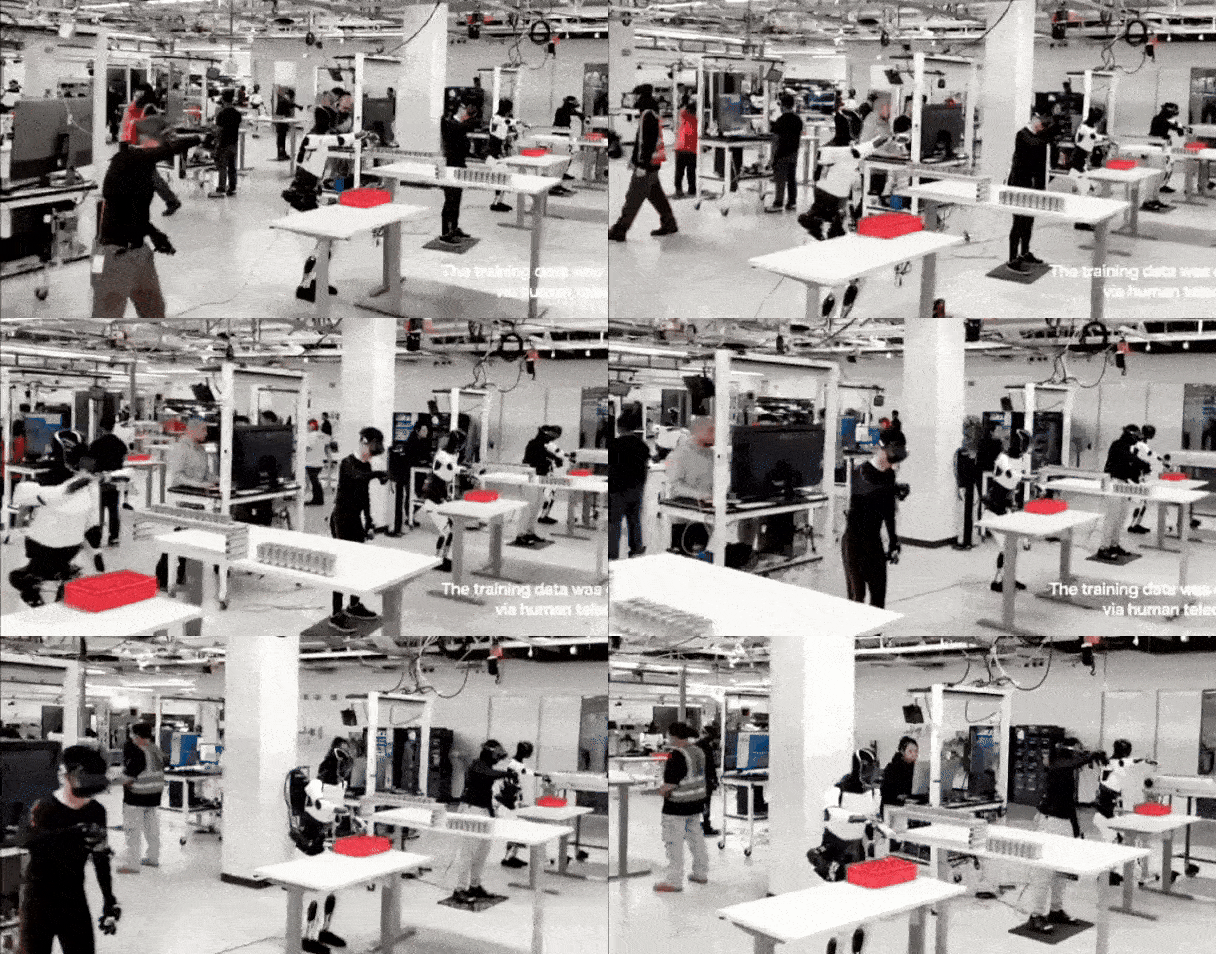
Think of it as a vacuum cleaner for "muscle memory." It digitizes human labor. It records how a master carpenter moves his hands, or how a nurse navigates a hospital room. It then feeds that "Spatial Data" into the AI to train the robots.
The "Supplier" Advantage
This is the classic "Levi's Strategy." During the Gold Rush, most miners went broke. Levi Strauss got rich selling them jeans. In the Robotics Rush, most robot makers will fail. But they all need data to train their machines. This company is positioning itself to be the universal supplier of "Spatial Intelligence."
By the way, deals like this usually stay locked inside Silicon Valley venture rounds, but I found a regulatory window that allows you to invest at under $1 per share before the deadline closes
Continued for those who understand Pre-IPO dynamics.
🐳 The "Dec 18" Deadline: Why Timing Beat Talent
Let’s talk about Asymmetry. In the public markets (stocks you buy on E-Trade), everything is "efficient." If Nvidia has good news, the stock gaps up instantly. The price reflects the information. You are paying full retail price.
In the private markets (before the IPO), there is "Inefficiency." Valuations lag behind reality. This company - the one building the Visor - is currently offering shares at Sub-$1. Why? Because they are in an early capital-raising phase. They are building the inventory of headsets and the library of data.
The "Data Library" Valuation
Here is how a Whale values this: Don't look at the hardware sales. Hardware is a commodity. Look at the Data Library. If this company succeeds in capturing millions of hours of human labor data (plumbers, electricians, chefs), that database becomes priceless. It becomes the "Rosetta Stone" for every robotics company on earth.
Tesla needs it for Optimus.
Amazon needs it for warehouse bots.
Google needs it for general AI.
When you own the only source of a critical resource, you have Pricing Power. And companies with pricing power do not stay at $0.85/share forever.
The "December 18" Catalyst
The promo mentions a hard deadline: December 18. In private equity, these dates usually signify the closing of a "Round." When a round closes, the valuation typically "steps up." That means if you buy on December 19, you might be paying $1.20 or $1.50 for the exact same share you could have bought for $0.85. That is the "Procrastination Tax."
The Whale's Verdict
The risk here is obvious: It’s an early-stage hardware/data company. Execution is key. But the Reward Profile is skewed massively in your favor. If the "Humanoid Robot" thesis plays out - and I believe it is the biggest trend of the 2030s - then the company that teaches the robots how to move will be a unicorn.
You can wait for the IPO and pay $15.00 a share. Or you can take a look at the deal now, while it’s still under the radar.
If you've read this far, you're definitely my kind of person. You hunt for value where others fear to tread. Here is the link again to verify the valuation and the deadline
|
Sponsored Content
Top Picks from Partners We Trust
|
The "Chatbot" hype is cooling. What is the next bubble?
Your feedback is important to us. Here are the results of yesterday's poll:

12/13 Poll - Do you feel "Late" to big tech stocks like Nvidia?
If You Could Be Earlier Than 85% of the Market?

Most read the move after it runs. The top 250K start before the bell.
Elite Trade Club turns noise into a five-minute plan—what’s moving, why it matters, and the stocks to watch now. Miss it and you chase.
Catch it and you decide.
By joining, you’ll receive Elite Trade Club emails and select partner insights. See Privacy Policy.
|
Stay ahead of the current - subscribe free
Subscribe to Whales Investing
|
